

Casa
Capri
.png)
Project Details
Residential building
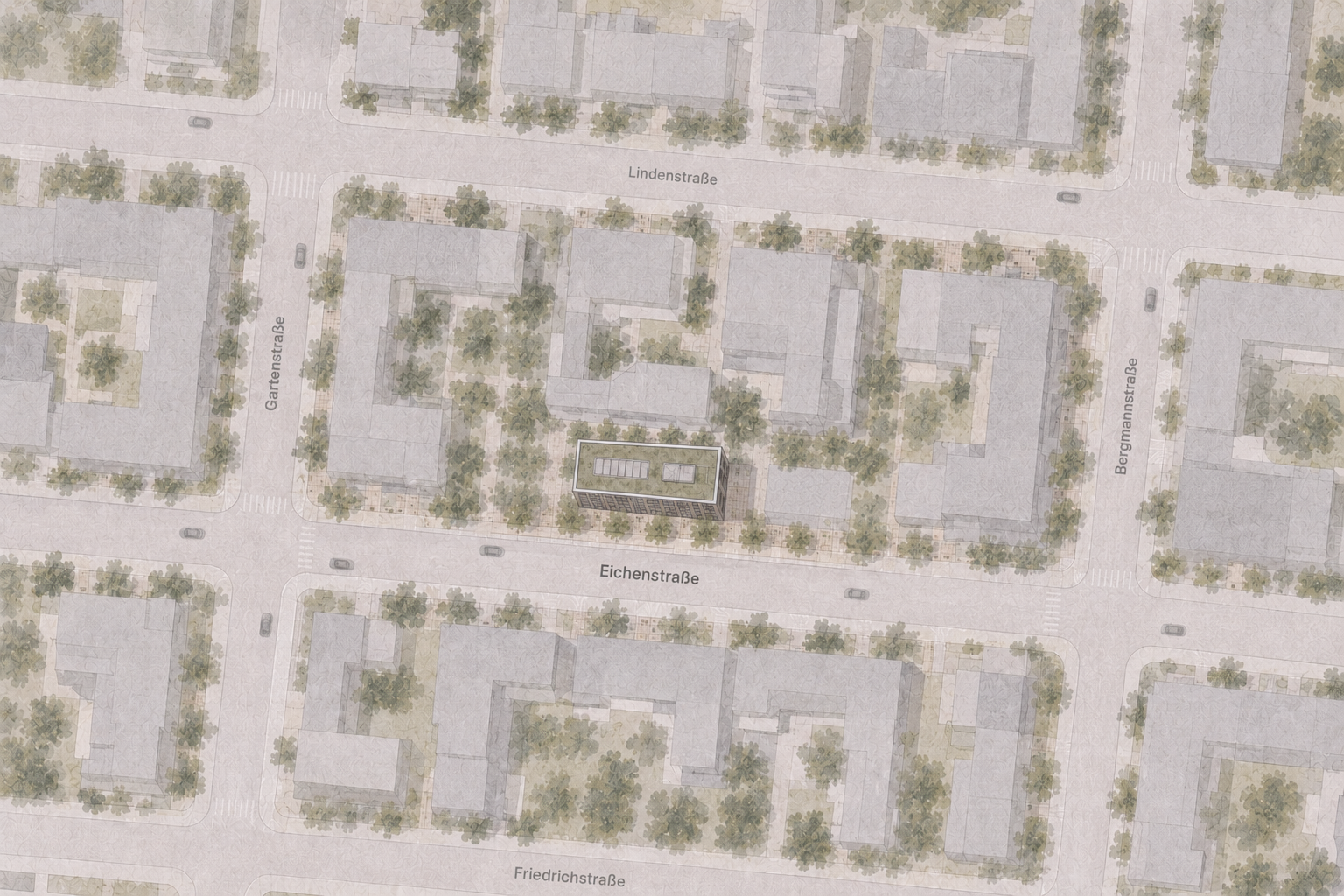
Located in Hamburg, the project is conceived as a contemporary residential building within a city whose architectural identity is strongly shaped by red brick. From the historic warehouses of the Speicherstadt to the expressive brick façades of the Kontorhaus district, Hamburg has long used brick as both a practical and cultural material. Its prevalence is rooted in the geography of northern Germany: the region had limited access to local natural stone, while clay was abundant, making fired brick and clinker a durable solution for the city’s maritime climate.
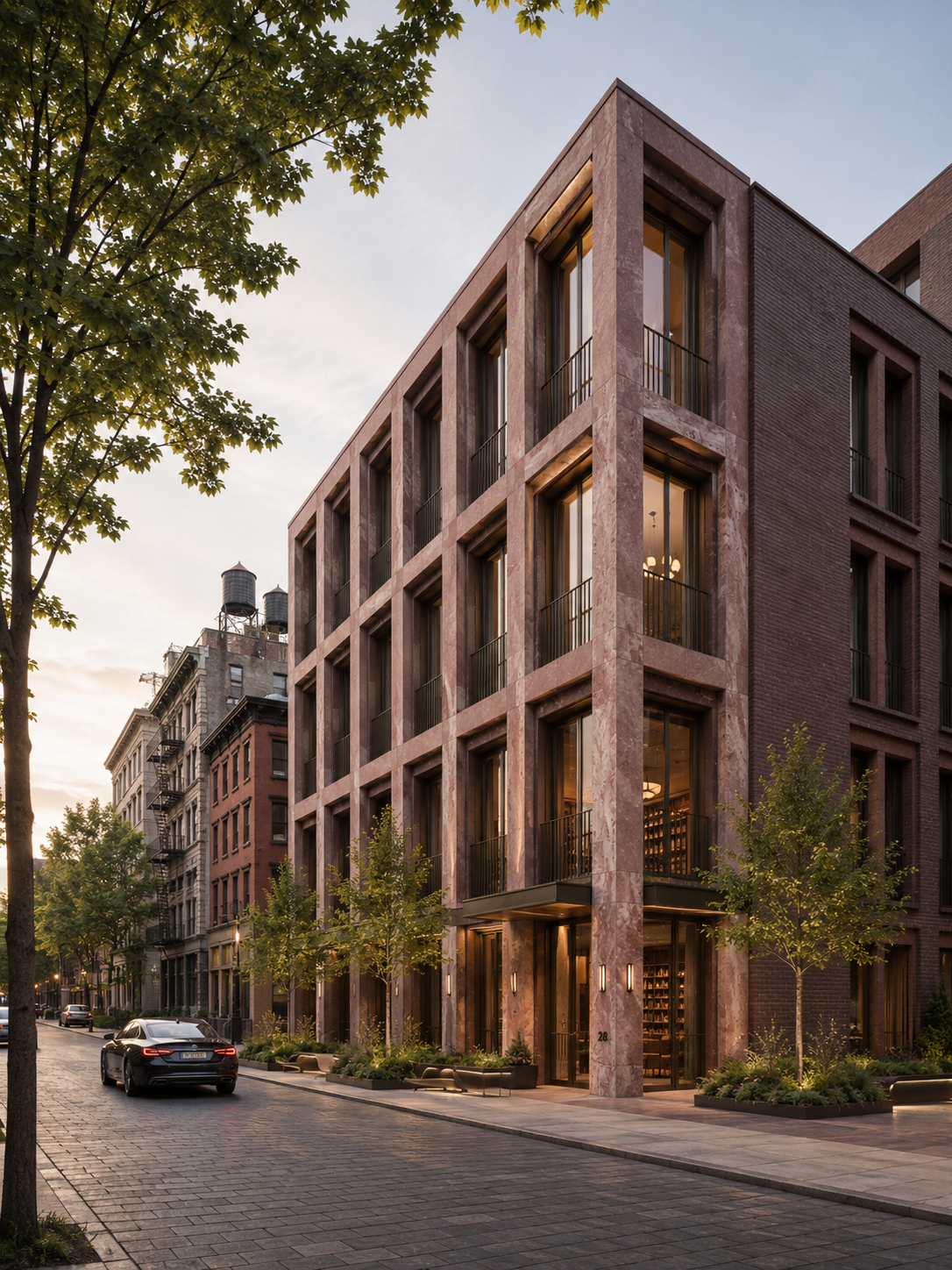
The building responds to this context without directly imitating it. Rather than using brick as the primary façade material, the design introduces a warm red-veined natural stone, creating a more refined and civic presence while preserving a dialogue with Hamburg’s brick tradition. The tone of the stone relates to the surrounding masonry, but its scale, depth and veining give the façade a more contemporary and sculptural presence.
The street elevation is organised as a clear architectural frame. Deep vertical bays, generous window openings and fine metal railings create a measured rhythm along the façade. The composition balances solidity and transparency: the stone structure gives the building weight and permanence, while the recessed glazing and warm interior light bring depth and domesticity to the street. The façade is not treated as a flat surface, but as a layered threshold between the private interiors and the urban street. This depth gives shadow, texture and a sense of craftsmanship to the architecture.
The building contains eight apartments, each designed with generous ceiling heights, tall openings and carefully proportioned interiors. Restrained but solid materials are used throughout. The apartments feature Carrara marble, natural oak floors and refined detailing, creating interiors that feel calm, tactile and quietly luxurious.
GAllery